Will Learning Dutch Help Me Get a Job?

Wondering if learning Dutch will boost your career in the Netherlands? Find out which jobs require Dutch, what level you need, and how to get there fast.
May 28 / Koen Kleinstra
Short answer: yes, and more than you might think. Learning Dutch won't just make your daily life easier in the Netherlands. It can genuinely open doors in your career that stay closed to people who only speak English.

But let's be honest with you: it's not magic. How much Dutch helps you depends on your field, your level, and how you use it. In this post we'll break it all down so you can make a smart decision.
"I started learning Dutch six months before my job interview. I got the job, and my manager told me later that my Dutch was the deciding factor over two other candidates."
Sarah, Marketing Manager, Utrecht

Why Dutch matters in the Dutch job market

The Netherlands is one of the most English-friendly countries in the world. So why bother learning Dutch at all? Because that's exactly the trap many expats fall into.

Yes, you can survive (and even work) in English here. But surviving and thriving are two different things. Dutch companies, especially Dutch-founded ones, tend to default to Dutch in meetings, informal chats, and internal culture. If you don't speak the language, you're always slightly on the outside.

And employers notice. When two candidates are equally qualified, the one who speaks Dutch (even at an intermediate level) almost always wins.

Jobs where Dutch is almost essential

Some fields in the Netherlands are simply harder to break into without Dutch. Here's where it makes the biggest difference:
Healthcare
Patient communication requires Dutch at minimum B2 level.
Education
Teaching at Dutch schools requires strong Dutch proficiency.
Government & law
Patient communication requires Dutch at minimum B2 level.
Customer service
Most Dutch clients expect Dutch-speaking service reps.

Jobs where Dutch gives you a competitive edge

In international companies, tech firms, or startups, English is often the working language. But even there, speaking Dutch makes you stand out. You'll integrate faster, build better relationships with Dutch colleagues, and show commitment to actually living here, not just passing through.

Hiring managers notice that too. It signals motivation and adaptability, qualities every employer wants.

What level of Dutch do you need?

You don't need to be fluent to start benefiting. Here's a quick overview:

A1–A2
Shows effort. Great for social integration and impressing colleagues.

B1–B2
The sweet spot for most jobs. Enough to hold meetings, write emails and contribute in Dutch.

C1–C2
Opens doors to all sectors, including government, law, healthcare and senior roles.

Dutch on your CV: does it actually help?

Yes, and more than most people expect. Adding Dutch to your CV (even at A2/B1 level) signals that you're serious about settling in the Netherlands. Recruiters love it. It reduces the perceived "flight risk" of hiring an expat, which is a real concern for many Dutch employers.

Just make sure you're honest about your level. There's nothing more awkward than claiming C1 and then freezing up in a Dutch phone call.

How to learn Dutch efficiently for work
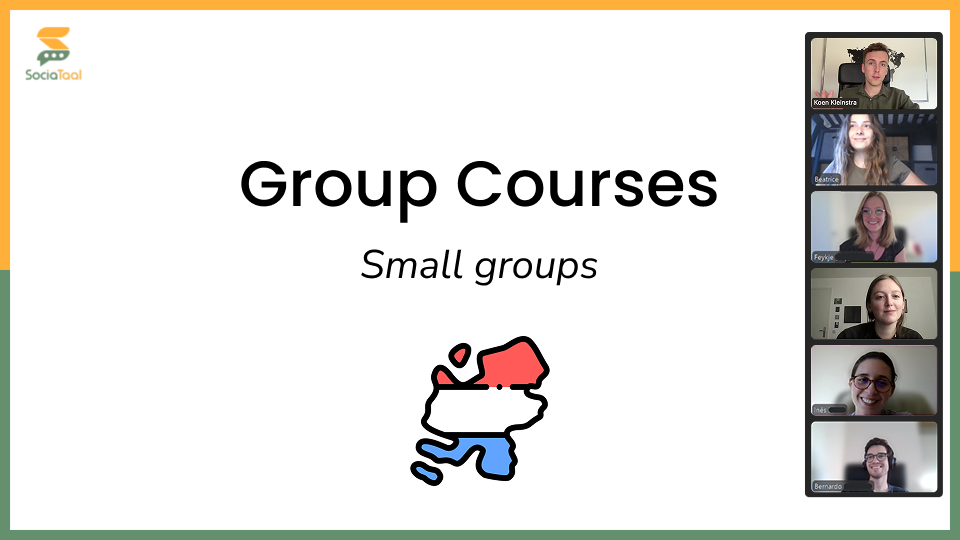
If your goal is career-related, SociaTaal will help you structure your learning around real work situations: writing professional emails, participating in meetings, presenting your ideas. But in the beginning, it's basic, but crucial, topics that build a strong foundation for work-related Dutch.

The fastest route? Consistent, structured practice with a real teacher who focuses on your specific goals, not just grammar exercises from a book. You can take a private course, but SociaTaal group courses often bring equal results for a fraction of the price.

Because of the smart course structure, and the small groups, it's equally powerful to a private course.
Online Dutch Group Course SociaTaal

Ready to take your Dutch seriously?

At SociaTaal we offer structured Dutch courses designed for motivated adults. No fluff, just real progress and focus on speaking Dutch.

The bottom line

Learning Dutch won't guarantee you a job. But it will make you a stronger candidate, help you integrate into Dutch workplace culture, and open up a whole range of roles that would otherwise be off-limits.

The question isn't really whether Dutch will help you get a job. The question is: how long are you willing to stay on the outside looking in?